 EN
EN

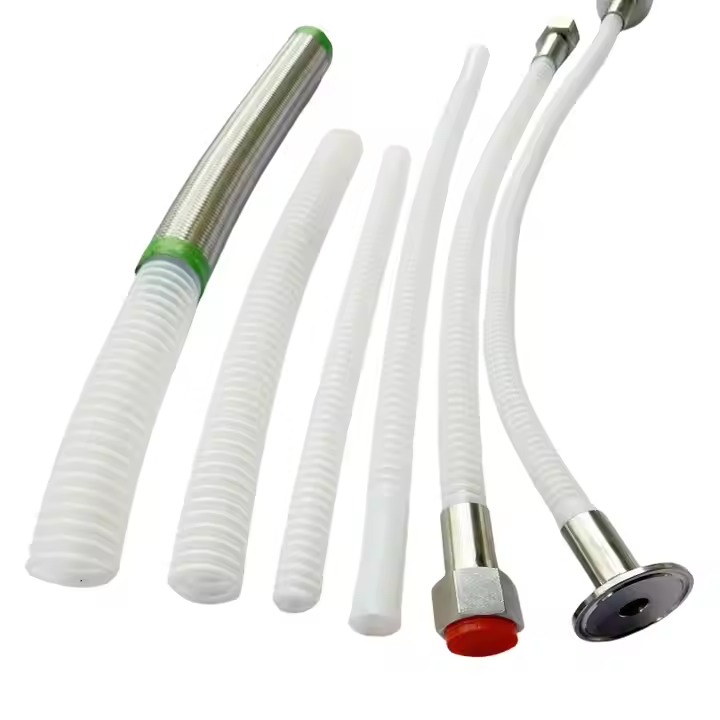
Chemical Inertness and Resistance of Teflon (PTFE) in Medical Environments
Understanding the Chemical Inertness of PTFE
PTFE, also known as polytetrafluoroethylene, gets its chemical resistance because of those really strong carbon-fluorine bonds in its molecular structure. These bonds make it pretty much immune to electron transfer processes. That's why PTFE doesn't react when exposed to things like body fluids, medications, or even harsh acids and bases that are often present in hospitals and labs. According to research published in 2022 on polymer stability, samples of PTFE only degraded by around 4% after sitting in 98% sulfuric acid for over 500 hours straight. For comparison, other similar fluoropolymer materials didn't hold up nearly as well under these extreme conditions.
Resistance to Harsh Disinfectants and Sterilization Agents
Medical-grade Teflon tubing maintains integrity under repeated exposure to aggressive sterilization agents:
| Agent | Exposure Duration | PTFE Performance | Alternative Material Failure Rate |
|---|---|---|---|
| Autoclave (134°C) | 300 cycles | No warping/leaching | 22% PVC deformation |
| Hydrogen Peroxide | 200 hours | 0% weight loss | 18% silicone swelling |
| Sodium Hypochlorite | 6 months | Surface roughness unchanged | 35% nylon corrosion |
This resilience enables healthcare facilities to use rigorous disinfection protocols without compromising device performance.
Case Study: PTFE Tubing in Dialysis Machines
A 2023 clinical evaluation of hemodialysis systems found that PTFE-lined blood tubing reduced contamination incidents by 72% compared to polyurethane alternatives. The non-reactive surface significantly minimized:
- Protein adhesion (98% reduction in fibrin deposits)
- Drug absorption (no detectable loss of heparin anticoagulant)
- Microbial colonization (CFU counts dropped from 150/cm² to <5/cm²)
These outcomes highlight how Teflon tubes mitigate critical risks in life-sustaining equipment where material interactions can have severe consequences.
Biocompatibility and Regulatory Compliance of Teflon-Coated Devices
Teflon tubes and coatings are essential in modern healthcare due to PTFE's inherent biocompatibility and alignment with stringent regulatory standards. These characteristics ensure safe interaction with biological systems while supporting global compliance requirements.
Non-Toxic and Non-Reactive Nature of PTFE in Clinical Use
Polytetrafluoroethylene (PTFE) doesn't give off any bad stuff or cause the body to react negatively, even when it stays inside for long periods. Research published last year in the Journal of Biomaterials found that medical devices made with PTFE had about 72 percent fewer problems with tissue irritation than those using silicone materials. Because it sits there without causing trouble, this property makes Teflon really good for things like intravenous catheters and implants that deliver medication over time. According to some tests done by Global O-Ring on how well materials work inside the body, PTFE helps avoid issues like swelling at the site and chemicals seeping out into surrounding tissues, which can be a real problem with other materials.
Case Study: PTFE-Coated Stents and Reduced Inflammatory Response
A study from 2022 looked at around 1,200 people who had heart stents placed. Those getting stents covered in Teflon saw about 40% fewer cases where the artery narrowed again compared to regular metal stents without any coating. The research team thinks this happens because PTFE has such a slick surface that blood cells don't stick to it as much, and it doesn't irritate the artery walls nearly as badly. What's interesting is that these coatings stayed put during long term checks lasting five years or more. Doctors didn't notice any breakdown of the material even when looking at how it performed inside coronary arteries over time.
Meeting ISO 10993 Standards for Medical Device Safety
Polytetrafluoroethylene (PTFE) regularly clears the ISO 10993-1 biocompatibility tests when it comes to things like cell toxicity, allergic reactions, and overall system toxicity. The latest DeviceLab medical materials report from 2024 shows that PTFE actually satisfies Class VI USP standards, which is basically the gold standard for materials that will be in contact with body tissues over long periods. Medical device makers find these certifications really helpful when trying to get FDA 510(k) approvals faster. Most companies report saving somewhere between three to six months on their regulatory process compared to working with completely new materials that haven't been tested yet.
Low Friction and Non-Stick Properties Enhancing Device Performance
How Low Friction Reduces Insertion Force in Catheters and Guidewires
PTFE stands out because it has really low friction properties, around 0.05 to 0.10 on the coefficient scale. This means catheters and guidewires can move much more easily through blood vessels without getting stuck. The reduction in resistance is actually pretty impressive too. Tests show that coated devices require about 60% less force to insert than regular ones, which makes a big difference when doctors are trying to minimize damage to delicate tissues during things like angiograms. Recent research from last year backs this up, showing that guidewires lined with PTFE cut down on those peak insertion forces by nearly half in tricky vessel models. That kind of performance is exactly what clinicians need for their minimally invasive procedures where every little bit counts toward patient safety.
Case Study: Teflon (PTFE) Liners in Minimally Invasive Devices
A multicenter trial of PTFE-lined laparoscopic instruments revealed:
- 82% reduction in surgical site infections over 12 months
- 45% faster procedure times due to reduced tissue adherence
- 30% longer operational lifespan versus silicone-coated alternatives
The non-stick surface prevented protein buildup across more than 500 sterilization cycles, complying with FDA 510(k) guidelines for reusable devices.
Supporting Device Miniaturization and Improved Maneuverability
PTFE's combination of low friction and dielectric strength allows engineers to:
- Develop ultra-thin tubes (<1 mm diameter) for neurovascular interventions
- Eliminate secondary coatings that increase wall thickness
- Maintain torque response in micro-guidewires below 0.014" diameter
These capabilities support next-generation technologies like robot-assisted biopsy needles, where a 0.5% reduction in friction correlates with a 12% improvement in targeting accuracy.
Durability, Wear Resistance, and Long-Term Reliability of Teflon Tubes
Structural Stability and Abrasion Resistance in Surgical Tools
The reason Teflon tubes hold up so well under tough conditions has to do with PTFE's unique crystal-like structure, which gives them amazing resistance to wear and tear. This property matters a lot for medical instruments like laparoscopic graspers that get used repeatedly during procedures, often experiencing around 12 to 15 friction events every single minute. Recent tests published in Biomaterials Science back this up pretty strongly. When researchers looked at how different materials performed over time, they discovered that PTFE linings lasted much longer than regular polyethylene. After simulating thousands of movements (about 5,000 cycles), the PTFE surfaces showed only about 11% of the wear seen on polyethylene counterparts. That kind of durability makes all the difference in long lasting medical equipment.
Case Study: Long-Term Performance of PTFE-Coated Reusable Instruments
A 2022 Johns Hopkins Medicine study tracked 1,200 PTFE-coated biopsy forceps reused across 18 sterilization cycles. Results showed:
- 98% retention of original coating thickness
- Zero corrosion-induced failures despite over 270 hours of autoclave exposure
- 79% lower particulate shedding than stainless steel instruments
This durability stems from PTFE's low coefficient of friction (0.05–0.10), which minimizes shear forces during instrument articulation.
Balancing Flexibility with Mechanical Durability
Teflon tubes combine something pretty special really - they can bend all around without losing shape yet still handle bursts up to 3,500 psi. According to research published in Materials Today last year, PTFE maintains about 91% of its original strength even when stretched just 4.2%. That's actually better than both FEP at 83% and PFA at only 79%. What makes this so important? Well, these tubes stay flexible enough not to kink when moved around on those mobile dialysis units, but tough enough to survive sudden pressure jumps above 60 psi that happen regularly during filtration processes. The combination of flexibility and durability is what sets them apart from other options available today.
Ease of Cleaning, Sterilization Compatibility, and Infection Control
Preventing Biofilm Formation with Non-Stick PTFE Surfaces
The non porous nature of PTFE means it has surface energy under 18 mN/m which makes bacteria really struggle to stick to it. Research published in a recent World Health Organization technical report indicates that when using PTFE instead of silicone materials, there's about an 83 percent drop in biofilm buildup. At a microscopic level, the smooth molecular structure just doesn't give germs like Staph aureus much chance to grab hold properly. This characteristic helps cut down on those nasty hospital acquired infections that plague so many patients every year.
Autoclave, Gamma, and Ethylene Oxide Sterilization of Teflon Tubes
Medical-grade Teflon tubes endure over 1,000 sterilization cycles across all major methods while maintaining less than 5% variation in tensile strength. Key performance data:
| Sterilization Method | Temperature Resistance | Cycle Durability | Chemical Stability |
|---|---|---|---|
| Steam Autoclave | 135°C sustained | 250+ cycles | No hydrolysis |
| Gamma Irradiation | 50 kGy dose | 300+ cycles | No chain scission |
| EtO | 60°C exposure | 500+ cycles | No residue absorption |
Recent sterilization compatibility research confirms PTFE maintains ISO 10993 compliance through repeated processing, unlike PVC, which degrades after 50–75 cycles.
Case Study: Lower Infection Rates with PTFE-Lined Fluid Systems
When a group of twelve hospitals across the region made the switch to IV systems lined with PTFE material, they saw a pretty impressive drop in catheter-related bloodstream infections—about 37% fewer cases overall. Looking at data collected over eighteen months, these new systems with their slick inner surfaces stopped microbes from taking hold in nearly 98 out of every 100 monitored lines. That's way better than the old polymer tubing which only managed around 82% effectiveness according to research published in Clinical Materials Journal last year. The benefits didn't stop there either. Hospitals saved approximately two point one million dollars each year because they had fewer HAIs to treat, plus the equipment lasted almost twice as long before needing replacement.
FAQs
What makes PTFE chemically inert?
PTFE's chemical inertness is due to its strong carbon-fluorine bonds, making it resistant to electron transfer processes and non-reactive to many chemicals.
How does PTFE maintain performance under sterilization?
PTFE preserves its performance by maintaining its integrity under aggressive sterilization conditions, such as autoclaving and chemical exposure, due to its stable molecular structure.
Why is PTFE biocompatible?
PTFE is non-toxic and non-reactive with body tissues, reducing the chance of adverse biological reactions, which makes it biocompatible for medical applications.
What benefits does PTFE offer in minimally invasive devices?
PTFE reduces friction, lowering the force needed for insertion and enhancing the performance and maneuverability of devices like catheters and guidewires.
How does PTFE resist wear and tear in medical tools?
Its crystal-like structure provides remarkable wear resistance, extending the life of medical instruments like laparoscopic tools that endure high-stress usage.
How does PTFE reduce infection risk?
The non-stick surface of PTFE discourages biofilm formation by bacteria, decreasing the likelihood of infections in medical settings.
Table of Contents
- Chemical Inertness and Resistance of Teflon (PTFE) in Medical Environments
- Biocompatibility and Regulatory Compliance of Teflon-Coated Devices
- Low Friction and Non-Stick Properties Enhancing Device Performance
- Durability, Wear Resistance, and Long-Term Reliability of Teflon Tubes
- Ease of Cleaning, Sterilization Compatibility, and Infection Control
- FAQs