 EN
EN

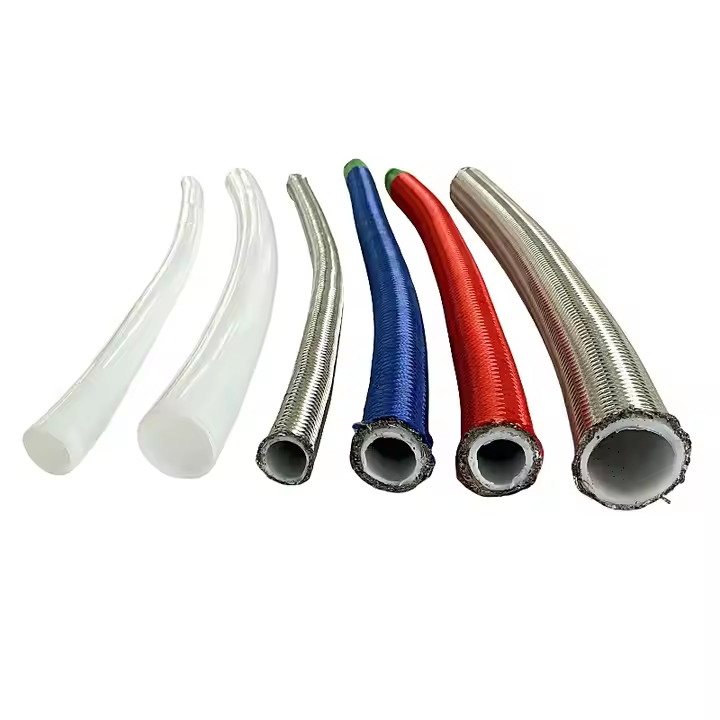
The Molecular Basis of PTFE’s Exceptional Chemical Resistance
The Strength of Carbon-Fluorine Bonds in PTFE Material and Its Role in Corrosion Resistance
What makes PTFE tubes so resistant to corrosion? Look no further than those mighty carbon-fluorine (C-F) bonds, some of the toughest links in all of organic chemistry. These bonds take around 485 kJ/mol to break, which is actually about 30% stronger than regular carbon-hydrogen bonds. That's why PTFE stands up against really harsh stuff like concentrated sulfuric acid and even chlorine gas without breaking a sweat. The fluorine atoms basically form a protective shield around the polymer structure, stopping corrosive substances from stealing electrons through chemical reactions. This property explains why PTFE remains popular in industries dealing with aggressive chemicals despite being relatively expensive compared to other materials.
Symmetrical Polymer Structure and Its Contribution to PTFE Chemical Resistance
PTFE’s helical chain structure creates a uniform fluorine sheath, eliminating weak points for chemical attack. This symmetry ensures:
| Property | Impact on Corrosion Resistance |
|---|---|
| Low surface porosity | Prevents chemical permeation |
| Non-polar structure | Neutralizes ionic reactions |
| Crystallinity (85–95%) | Blocks solvent diffusion |
Unlike irregular polymers like PVC, PTFE’s alignment resists swelling or dissolution even in acetone or toluene.
Inertness and Non-Reactivity: Why PTFE Resists Acids, Bases, and Solvents
The electronegativity of fluorine atoms (4.0 Pauling scale) makes PTFE non-reactive. Acids and bases cannot donate or accept electrons from its saturated structure. A 2023 Material Compatibility Study showed 99.6% retention of tensile strength in PTFE after 6-month exposure to 98% sulfuric acid at 150°C.
Thermal Stability Enhances PTFE’s Performance in High-Temperature Chemical Environments
PTFE maintains chemical resistance up to 260°C (500°F), far exceeding nylon (120°C) and PVC (60°C). At 327°C (melting point), the C-F bonds remain intact, preventing decomposition into reactive byproducts. This stability allows PTFE tubes to handle hot hydrofluoric acid in semiconductor etching without degradation.
Mechanisms Protecting PTFE Tubes from Corrosive Chemical Attack
PTFE tubes achieve corrosion resistance through three interconnected mechanisms that leverage the material’s intrinsic fluoropolymer properties. These mechanisms combine molecular inertness with physical barrier properties to combat chemical degradation across industrial applications.
Low Surface Energy and Hydrophobicity: Barrier Protection in PTFE Coatings
PTFE has this really low surface energy around 18 to 22 mN/m which makes it super resistant to things like water and other chemicals. Because of this, surfaces treated with PTFE just don't get wet easily. Water droplets sit on top instead of spreading out, with contact angles often over 110 degrees when tested against water or strong acids according to research from the American Chemical Society back in 2023. What this means practically is that chemicals can't stick to or seep into the material. So when PTFE coats something else, it acts like a shield between whatever corrosive stuff might be there and whatever surface needs protection underneath.
How PTFE Tubing Resists Reactive Substances: A Mechanistic Overview
The symmetrical carbon-fluorine structure of this polymer makes it really good at stopping oxidizing agents such as nitric acid and chlorine gas from transferring electrons. Studies done by the Fluoropolymer Innovation Network show something interesting too PTFE inner tubes slow down chemical reactions by about 74 percent compared to FEP ones when they're put into contact with 98 percent sulfuric acid at around 150 degrees Celsius. What's even cooler is how resistant these materials stay across all pH levels from 0 to 14. They just don't react with things like water breakdown or those tricky nucleophilic substitutions that happen so often in factories and plants.
Limitations of PTFE: When Corrosion Resistance Fails Under Extreme Conditions
PTFE generally holds up against most chemicals, but there are exceptions. Molten alkali metals such as sodium when heated past 600 degrees Celsius, along with fluorine gas, actually break down the material's structure via those tricky radical chain reactions we've all heard about. Then there's the issue with high speed oxidizers like nitrogen trifluoride which eat away at PTFE surfaces in flowing systems. Research from the Materials Performance Journal back in 2023 found these systems lose around quarter of a millimeter each year when exposed to flows hitting 25 meters per second. And let's not forget about temperature fluctuations either. Repeated heating beyond 260 degrees Celsius tends to create tiny cracks over time, which gradually weaken how well PTFE resists chemicals in the long run.
PTFE Compatibility with Common Chemicals in Industrial Processing
Performance of PTFE Tubes with Strong Acids Like Sulfuric and Nitric Acid
PTFE tubing stands up really well against concentrated sulfuric acid concentrations as high as 98% when heated to around 100 degrees Celsius, plus it handles 70% nitric acid at much hotter temperatures up to 200 degrees Celsius. For this reason, many chemical processing plants rely on PTFE components when dealing with those harsh acids that eat through most materials. The secret behind this durability lies in the unique carbon-fluorine bonding within PTFE molecules. According to various industry reports, these bonds hold their strength remarkably well even after long periods of contact with strong acids at high temps. That makes PTFE a go-to material for applications where regular tubing would simply fail catastrophically over time.
Stability of PTFE in Alkaline and Base-Rich Environments
In 40% sodium hydroxide solutions at 140°C, PTFE tubing shows no measurable degradation over 12 months, outperforming most fluoropolymers. The material’s symmetrical polymer structure creates an impervious barrier against caustic substances like potassium hydroxide and ammonium hydroxide, as confirmed by ASTM F1545 testing protocols.
Comprehensive Review of Corrosive Chemicals Compatible with PTFE
PTFE’s chemical resistance spans:
- Oxidizing agents: Hydrogen peroxide (30% at 60°C)
- Halogens: Chlorine gas (dry, up to 200°C)
- Solvents: Acetone, benzene, and xylene
Exceptions occur with molten alkali metals and fluorine gas above 300°C, where PTFE tubing undergoes gradual decomposition. For 95% of industrial chemicals, PTFE maintains <0.1% swell ratio even after 5,000 hours of exposure (Parker Hannifin Chemical Resistance Index 2023).
Real-World Applications of PTFE Tubing in Corrosive Industrial Settings
PTFE in Semiconductor Manufacturing: Handling Ultra-Pure and Corrosive Media
PTFE tubing maintains purity standards in semiconductor fabrication by resisting both corrosive etchants (like hydrofluoric acid) and ultra-pure solvents. Its non-stick surface prevents particle shedding, critical for chemical vapor deposition systems operating at 300–500°F (149–260°C). This inertness ensures zero ionic contamination in nanoscale chip production.
Use of PTFE in Chemical Plants Processing Chlorinated Compounds
Manufacturers working with chlorine and various chlorinated solvents have found that PTFE tubes work really well for their operations at temperatures ranging from around 150 to 200 degrees Fahrenheit (that's approximately 66 to 93 Celsius). What makes PTFE so effective is its balanced polymer structure which basically means it doesn't swell up or break down when coming into contact with stuff like hydrochloric acid or those pesky vinyl chloride monomers. Take a look at some real world applications too. Many PVC production plants use PTFE lined transfer lines that can handle chlorine exposure for thousands upon thousands of hours without showing any signs of wear and tear on the actual structure itself. Some installations last well beyond five thousand operating hours straight through without needing replacement.
Long-Term Durability of PTFE Chemical Resistance in Petrochemical Refineries
According to the 2023 Chemical Industry Materials Review, PTFE tubing has been found to retain over 98 percent of its tensile strength even after sitting in crude oil distillation units for eight years or more, despite exposure to sulfur compounds and those pesky naphthenic acids. These results line up pretty well with what came out of the Global Petrochemical Safety Study in 2024. That research indicated PTFE tubes cut down on unexpected reactor shutdowns by about 60% when compared against FEP alternatives during hydrocracking operations at temperatures around 450 degrees Fahrenheit, which is roughly 232 Celsius. The numbers tell a clear story here about why many plants are making the switch.
PTFE vs. Other Fluoropolymers: Comparative Chemical Resistance in Industrial Use
PTFE vs. FEP and PFA: Comparing Chemical Resistance Ratings Across Harsh Substances
When it comes to standing up against harsh chemicals over long periods, PTFE tubing beats out both FEP and PFA polymers even though they share some basic similarities. Both PTFE and PFA get top marks for resisting chemicals in lab tests, but there's one key difference. PTFE stays stable through its entire working temperature range from -260 degrees Celsius all the way up to 260 degrees, whereas PFA starts losing strength at higher temps. FEP is easier to work with during manufacturing, but it doesn't hold up as well against strong sulfuric acid or chlorinated solvents when temperatures go above 150 degrees because its crystal structure isn't as dense (only about 68% compared to PTFE's impressive 95%). Recent research published in 2023 showed just how much better PTFE performs. These tubes lasted over 1,000 hours immersed in 98% nitric acid, while FEP samples started breaking down after just around 300 hours in the same environment.
Why PTFE Tubing Offers Superior Inertness Over Alternative Fluoropolymer Materials
What makes PTFE so resistant to chemical attack is basically its carbon-fluorine backbone structure. This creates a kind of shield that protects against those aggressive electron-hungry corrosives we see in industrial settings. Unlike FEP and PFA materials that sometimes have these little hydrogen side chains sticking out, PTFE maintains this consistent structure throughout. Lab tests actually show something pretty impressive too. After sitting submerged for six whole months, PTFE tubes only took in about 40% less hydrofluoric acid compared to their PFA counterparts by weight. And let's not forget about those harsh oxidation conditions either. Because PTFE doesn't react much at all, it stands up way better to things like peroxide solutions that would normally break down other materials over time. This makes it a real game changer for applications where stability matters most.
Frequently Asked Questions (FAQ)
What makes PTFE so resistant to corrosion?
PTFE's resistance to corrosion is primarily due to strong carbon-fluorine bonds and its symmetrical polymer structure, which act as a shield against chemical attack.
Can PTFE handle high temperatures without degrading?
Yes, PTFE maintains chemical resistance up to 260°C (500°F) and retains its integrity even at its melting point of 327°C.
Are there chemicals that can break down PTFE?
While PTFE is highly resistant, molten alkali metals and fluorine gas above 300°C can break down its structure.
Table of Contents
-
The Molecular Basis of PTFE’s Exceptional Chemical Resistance
- The Strength of Carbon-Fluorine Bonds in PTFE Material and Its Role in Corrosion Resistance
- Symmetrical Polymer Structure and Its Contribution to PTFE Chemical Resistance
- Inertness and Non-Reactivity: Why PTFE Resists Acids, Bases, and Solvents
- Thermal Stability Enhances PTFE’s Performance in High-Temperature Chemical Environments
- Mechanisms Protecting PTFE Tubes from Corrosive Chemical Attack
- PTFE Compatibility with Common Chemicals in Industrial Processing
- Real-World Applications of PTFE Tubing in Corrosive Industrial Settings
- PTFE vs. Other Fluoropolymers: Comparative Chemical Resistance in Industrial Use
- Frequently Asked Questions (FAQ)