 EN
EN

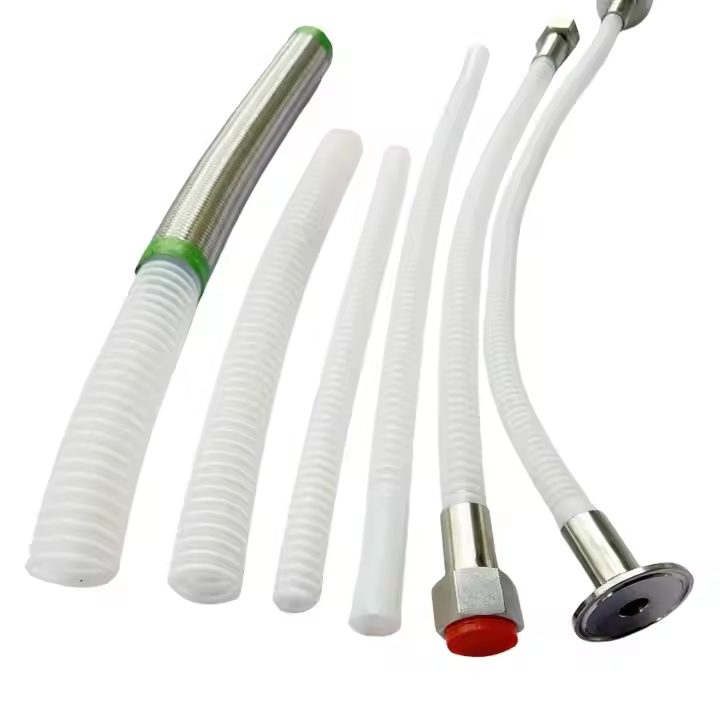
The Molecular Structure Behind Teflon Tube Thermal Stability
PTFE Composition and the Strength of Carbon-Fluorine Bonds
The secret behind Teflon tubes lies in their main component, Polytetrafluoroethylene or PTFE for short. What makes this material so special is those incredibly strong carbon-fluorine bonds. These bonds have an energy level of about 485 kJ per mole, which is roughly 30% stronger than regular carbon-hydrogen bonds found in other materials. Because fluorine atoms are so electronegative, they form a kind of protective shield around the carbon structure. This shield helps keep chemicals from attacking the material and reduces how much the molecules vibrate when exposed to heat. As a result, Teflon tubes stay intact and functional in situations where many other plastic materials would start to break down and fail.
Crystalline vs. Amorphous Regions in PTFE and Their Impact on Heat Resistance
The semi crystalline nature of PTFE gives it just the right mix between being rigid and flexible enough for most applications. About 70 to 80 percent of this material is made up of those crystalline areas where polymer chains pack together really tightly. These sections don't expand much when heated and help keep things dimensionally stable. What about the rest? Well, the amorphous parts actually work kind of like shock absorbers when there are quick temperature swings, taking some of the pressure off during thermal cycles. When we hit around 260 degrees Celsius which is pretty much the standard max temp limit the crystalline bits start to get softer instead of melting all at once. Thermal analysis done recently in the 2023 report on polymer stability backs this up. This gradual softening means equipment won't fail suddenly even under tough conditions in factories or other industrial settings.
Thermal Degradation Threshold of PTFE: Understanding the 260°C Limit
When temperatures go beyond about 260 degrees Celsius, PTFE starts breaking down thermally and gives off small amounts of fluorocarbon gases. The reason for this happens at around that temperature is because the bonds between carbon and fluorine need roughly 340 kilojoules per mole to break apart, something that becomes possible when heat persists over time. As far as how fast degradation occurs goes, there's actually a pattern called Arrhenius kinetics at work here. Basically, if we increase the temperature just 10 degrees past 260°C, the material will last only half as long before failing. Manufacturers trying to push performance closer to these limits have developed newer Teflon tubes with special features like stable crystal formation points, ingredients that grab excess oxygen molecules, and better aligned polymer chains. These improvements help delay the breakdown process while keeping the fundamental chemical makeup intact.
High-Temperature Performance of Teflon Tubes in Industrial Applications
Continuous Operating Limits of PTFE Tubing Under Heat Stress
Teflon industrial grade tubing stands up to continuous operation at temperatures reaching 260 degrees Celsius for well over 5,000 hours without losing its structural integrity according to Demax OEM reports from 2024. Rubber and PVC materials tell a different story though they start breaking down quickly once temperatures pass around 120 degrees. PTFE material keeps about 90 percent of its original tensile strength even after being subjected to repeated temperature changes throughout an entire calendar year. For industries working with chemical reactors or combustion systems, this kind of lasting durability makes all the difference. Equipment performs consistently despite long periods of intense heat, cutting down on those unexpected maintenance stops and making the whole operation safer in practice as well as theory.
Retention of Mechanical Properties at Elevated Temperatures
When heated to around 200 degrees Celsius, PTFE tubing still keeps about 85% of its normal flexibility at room temperature. Under pressure it shows less than 3% compression set, and maintains dielectric strength that's only about 5% off from standard measurements. These properties help avoid seal problems in hot hydraulic systems, cutting down maintenance expenses by roughly 40% when compared with silicone options according to research published by Bawalaksana in their 2023 chemical engineering report. What really stands out though is how this material handles both physical wear and heat stress simultaneously while maintaining its insulating qualities, making it particularly well suited for demanding industrial environments where reliability matters most.
Comparative Heat Resistance: PTFE vs. Other Fluoropolymers
PFA and FEP both resist chemicals pretty well, but when things get hot around 160 to 205 degrees Celsius, they start to soften up. That's actually quite a bit lower than PTFE which holds firm until it hits about 260 degrees. Some real world testing put these materials through their paces in furnaces. What did we find? PTFE lasted way longer than PVDF tubing during those heat cycles, roughly eight times as long according to the results. Because of this kind of performance, PTFE stands out as the go to choice for really tough applications. Think about places like aerospace where engines run super hot or glass factories where temperatures never drop. These are situations where most materials just can't cut it anymore once the heat gets going.
Low-Temperature and Cryogenic Resilience of Teflon Tubes
Material Behavior of PTFE at Sub-Zero Temperatures
Polytetrafluoroethylene (PTFE) stays strong even when temperatures drop as low as minus 200 degrees Celsius, way below what most plastics can handle. The reason? About 70 to 80 percent of its molecules form crystals, which keeps them from getting locked up when it gets really cold. Take nylon or PVC for instance these materials become almost useless at around minus 40 degrees, losing more than half their ability to bend and stretch. But PTFE still holds onto about 80% of its flexibility because those fluorine-carbon bonds don't stick together too tightly. This special property is why engineers rely on Teflon tubing so much for things like transporting liquefied natural gas or building pipelines in the Arctic. Metal parts tend to crack under such extreme conditions, but PTFE just keeps working reliably no matter how frigid it gets out there.
Flexibility and Crack Resistance in Cryogenic Environments
PTFE tubes show remarkable stability even when exposed to extreme cold like -268°C or around -450°F. After going through multiple thermal cycles, these tubes only deform permanently by less than 1%. What makes this possible? Well, the material has both crystalline and amorphous areas arranged alternately. When stress occurs, molecules within these regions can slip past each other in a controlled way, which stops cracks from spreading further. Tests have shown that PTFE actually lasts about ten times longer than FEP (fluorinated ethylene propylene) during freeze-thaw cycles before any surface issues appear. For engineers working with superconducting magnets or liquid nitrogen cooling systems, this kind of durability matters a lot. Components failing below -150°C could cause entire systems to shut down unexpectedly, leading to costly repairs and downtime.
Real-World Industrial Applications of Thermally Stable Teflon Tubes
PTFE Tubing in High-Heat Industrial Systems
PTFE tubing finds its way into all sorts of demanding environments like combustion engines and aerospace hydraulic systems, especially where temperatures routinely go past 200 degrees Celsius. What really sets PTFE apart is how well it keeps seals intact in places such as turbocharger cooling lines or aircraft fuel systems. Studies indicate that around 78 percent of regular rubber materials tend to break down after just 1000 thermal cycles under similar harsh conditions. Compared to polyethylene that starts getting soft once temps hit about 90 degrees Celsius, PTFE stays dimensionally stable even when things get hot up to approximately 260 degrees Celsius. This property helps prevent unwanted leaks not only in exhaust gas recirculation systems but also in various instruments found inside smelting facilities where heat levels can be extreme.
Case Study: Chemical Processing with Repeated Thermal Cycling
In sulfuric acid distillation units subject to daily thermal cycling between 25°C and 230°C, PTFE tubing lasts 3.1 times longer than PFA alternatives. Over an 18-month period:
| Material | Replacement Frequency | Maintenance Hours | Downtime Costs |
|---|---|---|---|
| PTFE | 0.8 times/year | 12 hours | $8,400 |
| PFA | 2.5 times/year | 38 hours | $26,600 |
This extended service life results from PTFE’s crystalline structure resisting both thermal creep and acid permeation—dual challenges common in pesticide production facilities undergoing more than 30 thermal cycles per week.
Cost vs. Longevity: The Business Case for Teflon in Extreme Conditions
PTFE tubing might cost about 2.4 times what silicone alternatives do initially, but when looking at the big picture, it actually ends up costing around 40% less overall thanks to its much longer lifespan of roughly 7 to 10 years in demanding applications like nuclear reactor cooling systems and semiconductor fume scrubbers, as shown by various industry studies on product lifecycles. What makes PTFE so valuable is how well it handles extreme conditions without failing. Think about cryogenic LNG transfers where temperatures drop to minus 196 degrees Celsius versus hot environments involving molten salt heat exchanges at around 400 degrees Celsius. Plant operators appreciate being able to stick with just one kind of tubing instead of managing multiple types. And this flexibility cuts down spare parts inventory needs by approximately 35% according to surveys conducted among petrochemical facilities, which means less clutter in storage areas and smoother day-to-day operations too.
FAQ
How does PTFE resist high temperatures better than other plastics?
PTFE's strong carbon-fluorine bonds and semi-crystalline structure help it maintain stability at high temperatures, unlike many other plastics that start to degrade.
What is the maximum temperature Teflon tubes can withstand?
Teflon tubes can withstand temperatures up to about 260 degrees Celsius before they start to degrade.
How do Teflon tubes perform in cryogenic environments?
Teflon tubes maintain flexibility and crack resistance even at temperatures as low as minus 200 degrees Celsius, making them ideal for cryogenic applications.