 EN
EN

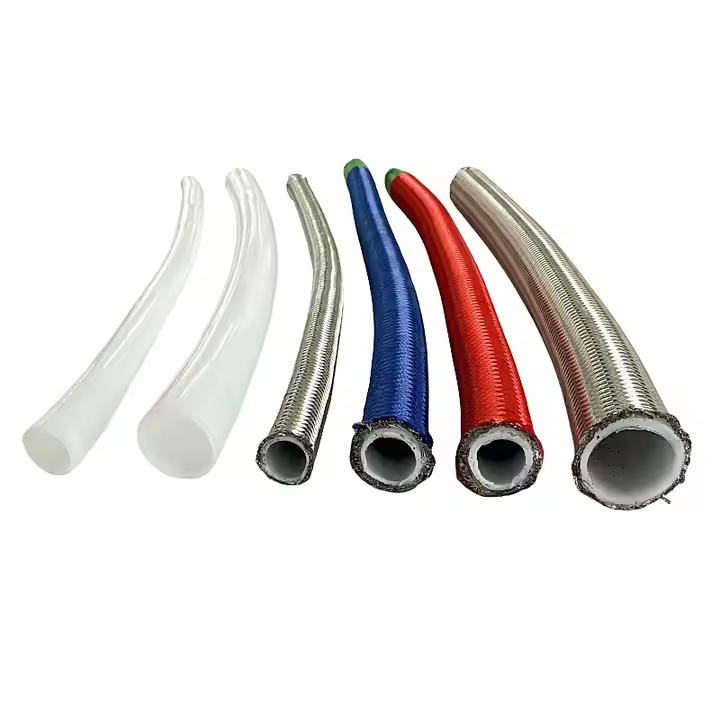
Unmatched Chemical Resistance: How Teflon Tube Outperforms Metals and Alloys
The corrosion challenge in aggressive chemical environments
The materials used in chemical processing plants tend to break down over time because they're constantly dealing with aggressive chemicals. When metals and metal mixtures come into contact with acids, solvents, or other reactive stuff, corrosion happens pretty quickly. This leads to all sorts of problems like leaks, contamination issues, and complete system breakdowns. Even top quality stainless steel isn't immune to damage. It actually tends to form stress cracks when sitting in environments rich in chlorides, which creates serious safety risks and forces expensive production halts. That's why plant operators really need good containment systems that can handle long term exposure to these harsh chemicals without falling apart.
Molecular inertness: Why Teflon tube resists acids, bases, and solvents
The amazing chemical resistance of Teflon tubes comes down to their polytetrafluoroethylene (PTFE) construction. What makes this material so special is those incredibly strong carbon-fluorine bonds that basically make the surface completely unreactive against all sorts of corrosive substances. Metals would typically react when exposed to aggressive chemicals like hydrochloric or sulfuric acid, not to mention strong bases such as sodium hydroxide. But PTFE just sits there unaffected. And let's not forget about organic solvents either - stuff like acetone and toluene have absolutely no effect on it whatsoever. This kind of molecular stability means the material doesn't swell up, crack apart, or lose strength over time like many rubber and metal options tend to do under similar conditions.
Real-world validation: Sulfuric acid transfer case study
One chemical plant recently ran a test comparing Teflon tubing to stainless steel when moving around 98% sulfuric acid. After about a year, those metal pieces were pretty beat up with lots of pits forming and walls getting thinner over time. Meanwhile, the Teflon tubes stayed almost exactly the same size they started at and kept their pressure handling capability intact. The workers there stopped dealing with unexpected breakdowns and saved nearly two thirds on replacement expenses because of this switch. So basically, PTFE proved itself as the better choice for these tough chemical applications where regular materials just can't hold up.
Reliable Performance Under Extreme Conditions: Temperature, Pressure, and Thermal Cycling
Operating envelope: Teflon tube’s thermal stability (-200°C to +260°C) and pressure ratings
PTFE tubing holds up really well when exposed to extreme temperature changes something regular metals just cant match. Take stainless steel for instance it gets brittle when temps drop below minus 20 degrees Celsius or starts warping once they go over 400 degrees. But Teflon tubes keep performing reliably even in super cold conditions down to minus 200 degrees Celsius all the way up to plus 260 degrees without suffering from thermal shock issues. Tests have shown these tubes show absolutely no deformation after sitting at 260 degrees Celsius for 48 straight hours in environments where oxidation is a concern beating out rubber options by about three times. When it comes to pressure handling capabilities standard PTFE can take around 150 pounds per square inch at room temperature while reinforced models made with braided composites manage to push this limit to approximately 220 psi. One major player in the petrochemical industry switched their setup from metal alloys to Teflon tubes for transporting pressurized ethylene and saw absolutely no failures in operation cutting down on leaks by nearly 92 percent according to findings published in the Ponemon Institute's Industrial Asset Reliability Report from last year.
Reinforced Teflon tube solutions for high-temperature solvent handling
When dealing with harsh solvents such as acetone which boils at around 56 degrees Celsius or toluene that hits 111 C, regular PTFE tubing often starts to warp when exposed to temperatures consistently above 150 C plus the added strain from system pressures. The solution comes in reinforced Teflon tubes that incorporate either braided stainless steel or aramid fiber reinforcement layers. These upgrades dramatically increase tensile strength by nearly double what standard options offer, all while maintaining excellent chemical compatibility. The reinforcement stops those annoying balloon effects during hot vapor transfers and tackles the permeation problems that plague most other polymer materials according to field reports. Lab testing has demonstrated these reinforced variants can handle over five thousand temperature swings ranging from minus 50 to 230 degrees Celsius with almost no measurable expansion or contraction. This kind of stability makes them indispensable for critical applications like pharmaceutical distillation where precision matters most.
Safety-Critical Containment: Leak Prevention and Regulatory Compliance with Teflon Tube
Eliminating hazardous leaks: Non-reactivity and barrier integrity of Teflon tube
PTFE tubes offer excellent leak protection for chemical processes because of how chemically stable they are at a molecular level. Metals tend to break down when they come into contact with things like acids, solvents, or other reactive substances. Even dangerous stuff such as hydrogen fluoride or chlorine won't affect PTFE material. What makes this possible is the way PTFE creates a barrier that doesn't let anything through while keeping its shape intact. Another benefit comes from the inside surface being so smooth it stops particles from building up over time. This buildup can actually damage seals in equipment like pumps and valves if left unchecked.
Meeting ASME B31.3 and FDA standards in pharmaceutical and fine chemical processing
PTFE tubing meets all those tough industry standards needed for applications where safety really matters. The stuff is super pure and won't let contaminants through, which is exactly what the FDA looks for in pharmaceutical processes. When materials start leaching into products during manufacturing, that can ruin everything. For chemical plants working with dangerous substances, Teflon tubes actually follow the ASME B31.3 codes for pressure piping. These tubes handle all sorts of risky transfers safely. Think about moving sulfuric acid around or purifying solvents. Plants using PTFE don't have to worry about expensive upgrades later because these tubes just work reliably over time while staying compliant with regulations.
Optimized Fluid Handling: Low Surface Energy and Non-Stick Flow Characteristics
How Teflon tube prevents fouling, residue buildup, and cross-contamination
The ultra low surface energy of PTFE tubing forms a really effective non stick surface that just naturally pushes away all kinds of contaminants. What this means in practice is that stuff like thick substances, proteins, and those pesky chemical deposits simply won't stick to it when moving through the system. Compared to metal or rubber alternatives, Teflon tubes keep things flowing smoothly because they don't let buildup form inside which would otherwise restrict the diameter over time. Real world data from processing facilities shows around 90 percent fewer particles sticking around compared to stainless steel counterparts after running continuously for six months straight. Plus, the super smooth molecular structure allows for total fluid drainage each time, so there's much less chance of one batch contaminating the next during production cycles.
Applications in viscous, toxic, or ultra-pure fluid transfer systems
This non-adhesive characteristic proves critical in handling:
- High-viscosity polymers like silicones and epoxies
- Cytotoxic drugs requiring zero residual carryover
- Semiconductor-grade acids where ionic contamination causes defects
- Bio-pharmaceuticals sensitive to surface interactions
Teflon tube’s passive flow enhancement reduces pumping energy by 15–30% in syrup production lines. Its inertness also prevents leaching when transferring aggressive solvents like acetone or toluene.
Total Cost of Ownership: Durability, Maintenance Savings, and Lifecycle Value of Teflon Tube
When evaluating chemical transfer systems, Teflon tube delivers unparalleled lifecycle economics through three critical advantages:
10+ year service life in chlor-alkali and caustic environments
Unlike metals that degrade under constant exposure to aggressive agents like chlorine or sodium hydroxide, Teflon tube’s molecular structure resists chemical attack. Facilities report 10+ years of continuous service in chlor-alkali processing without loss of integrity–eliminating frequent replacement cycles required for metal alternatives.
Reduced downtime and replacement costs versus stainless steel or Hastelloy
- Maintenance savings: Non-corrosive properties prevent scaling and pitting, reducing cleaning downtime by up to 70% compared to metal systems
- Replacement avoidance: A single Teflon tube installation typically outlasts 3–4 stainless steel replacements in sulfuric acid handling
- Leak mitigation: Eliminates costly process interruptions and hazardous material cleanup associated with corroded metal fittings
The extended service life and minimal maintenance requirements translate to 40–60% lower total cost of ownership over a decade–making Teflon tube the strategic choice for capital planning in corrosive applications.
FAQ
What makes Teflon tubes more chemically resistant than metal counterparts?
Teflon tubes are made of polytetrafluoroethylene (PTFE), and their carbon-fluorine bonds produce a surface that is unreactive against various corrosive substances, unlike metals which tend to react when exposed to chemicals.
How does Teflon tubing perform under extreme temperature conditions?
PTFE tubing retains its shape and performance under temperature ranges from -200°C to +260°C, unlike metals which may get brittle or warp under extreme cold or heat.
What are the benefits of using reinforced Teflon tubes?
Reinforced Teflon tubes include braided layers which increase tensile strength and prevent deformation or ballooning under high temperatures and pressure, offering a reliable solution for high-temperature solvent handling.
Does Teflon tubing meet industry safety standards?
Yes, Teflon tubing meets important industry standards like ASME B31.3 and FDA, making it suitable for safety-critical applications in pharmaceutical and fine chemical processing.
How does Teflon tubing help reduce total cost of ownership?
Teflon tubing provides durability and lower maintenance requirements, leading to reduced downtime, fewer replacements, and minimal maintenance costs, resulting in 40-60% lower total cost of ownership over a decade.
Table of Contents
- Unmatched Chemical Resistance: How Teflon Tube Outperforms Metals and Alloys
- Reliable Performance Under Extreme Conditions: Temperature, Pressure, and Thermal Cycling
- Safety-Critical Containment: Leak Prevention and Regulatory Compliance with Teflon Tube
- Optimized Fluid Handling: Low Surface Energy and Non-Stick Flow Characteristics
- Total Cost of Ownership: Durability, Maintenance Savings, and Lifecycle Value of Teflon Tube
-
FAQ
- What makes Teflon tubes more chemically resistant than metal counterparts?
- How does Teflon tubing perform under extreme temperature conditions?
- What are the benefits of using reinforced Teflon tubes?
- Does Teflon tubing meet industry safety standards?
- How does Teflon tubing help reduce total cost of ownership?