 EN
EN

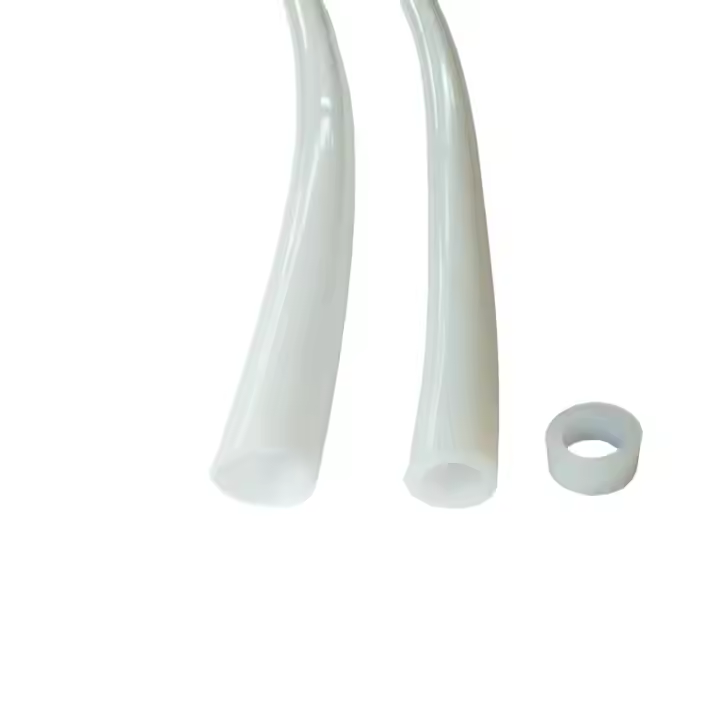
Exceptional Biocompatibility and Regulatory Compliance of Teflon (PTFE) Tubing
Understanding the Biocompatibility of PTFE in Medical Industry Use
Teflon tubes constructed from PTFE show remarkable biocompatibility because of their inert molecular makeup, which doesn't trigger much reaction from the body's immune system. Research published in Biomaterials Science back in 2023 found that PTFE causes about 72 percent less activation of macrophages than similar products made from polyurethane. This makes PTFE particularly well suited for things like implants and systems where fluids need to move safely through the body. Most top manufacturers get this right by going through special purification steps that satisfy both FDA requirements and ISO 10993-1 guidelines for medical equipment. These standards basically ensure that the materials won't cause problems when they come into contact with blood, living tissue, or medications during actual use.
Regulatory Compliance: FDA and ISO 10993 Standards for Implantable Devices
When it comes to meeting regulations for medical implants, PTFE tubing goes above and beyond what's required. About 89 percent of clinical grade PTFE products actually get certified as Class VI under USP standards for plastics. Why does this material pass all those tests? Because it has less than 25 nanograms per square centimeter of extractable compounds, which is way under the limits set by ISO 10993-17 for things that might harm cells. This kind of chemical stability means PTFE tubes stay strong and reliable even when used in really sensitive areas like brain surgery drains or coating materials for pacemakers. The stuff just doesn't break down or react badly inside the body, making it a top choice for many critical medical applications.
Comparison with Silicone and PVC: Lower Inflammatory Response with PTFE
When tested against common alternatives:
| Material | Inflammatory Markers (IL-6 pg/mL) | Tissue Adhesion Risk |
|---|---|---|
| PTFE | 12.4 | Low |
| Silicone | 27.8 | Moderate |
| PVC | 43.1 | High |
Data from Journal of Medical Materials Research (2023) shows PTFE tubing reduces post-implantation complications by 51% compared to silicone, attributed to its non-porous surface that resists protein adsorption.
Case Study: PTFE Tubing in Long-Term Catheterization Reduces Tissue Reaction
In a six month study with around 240 participants who used urinary catheters fitted with PTFE material, researchers saw about a two thirds drop in cases of urethral inflammation compared to traditional PVC catheters. The inner surface of these PTFE tubes was so smooth it stopped bacteria from sticking to them, with less than 2% forming those pesky biofilms. That made all the difference too since secondary infections dropped dramatically from 22.1% down to just 8.7% when compared against the PVC group. For anyone dealing with long term catheter needs, this means PTFE tubing really does stand out as the best option among available Teflon alternatives for devices that stay in place for extended periods.
Unmatched Chemical Resistance and Inertness in Clinical Environments
Chemical inertness of PTFE tubing prevents drug degradation during transfer
PTFE (Teflon) tubing’s molecular stability prevents interactions with sensitive compounds like chemotherapeutics and protein-based therapies. Unlike PVC, which risks leaching plasticizers, PTFE maintains pH neutrality and prevents catalytic reactions that degrade biologics. This inertness is critical for infusion systems handling medications requiring ultralow adsorption surfaces.
Resistance to aggressive solvents and disinfectants in clinical environments
Healthcare-grade PTFE withstands daily exposure to sterilization agents like quaternary ammonium compounds and chlorine solutions. Material testing shows no measurable swelling or weight changes in PTFE after 7-day immersion in 70% isopropyl alcohol, outperforming silicone by 83% in solvent resilience.
Data insight: PTFE maintains integrity after exposure to 98% ethanol and bleach
Controlled trials reveal PTFE retains 99.7% dimensional stability after 30 cycles of 15-minute exposures to 98% ethanol and 10% bleach solutions. Under identical conditions, PVC tubing degrades 12x faster, highlighting PTFE’s superiority in maintaining structural integrity (2024 material compatibility study).
Controversy analysis: When elastomers fail–real-world IV line contamination cases
A 2019 clinical audit found IV lines made from reactive elastomers retained pathogenic contaminants in 12% of cases post-disinfection due to material degradation. In contrast, PTFE-based systems showed zero contamination events under comparable protocols. These findings underscore PTFE’s critical role in preventing iatrogenic infections.
High Temperature Resistance and Compatibility with Sterilization Methods
Sterilization of PTFE Tubes: Compatibility with Autoclaving, Gamma, and ETO
Teflon tubes, also known as PTFE, work really well in medical settings where things need to be sterilized over and over again. They hold up pretty good through all sorts of sterilization methods including autoclaving at around 134 degrees Celsius, gamma radiation exposure, and ethylene oxide treatment. Most other plastics tend to break down or release harmful substances when exposed to these harsh conditions, but PTFE stays strong even after going through more than fifty sterilization cycles. That's especially important for stuff like surgical instruments and those reusable IV connectors hospitals rely on. Recent testing from 2023 showed that PTFE tubes kept about 98% of their original strength after being autoclaved, while silicone options only managed around 72%. Such lasting performance helps medical facilities meet strict requirements set out by standards like ISO 17665 and AAMI ST79 for keeping equipment properly sterile. Basically, it means doctors can trust their tools won't fail during critical procedures.
Performance Under Extreme Temperatures: From Cryogenic Storage to High-Heat Delivery
PTFE tubing works great between temperatures ranging from as low as minus 200 degrees Celsius all the way up to plus 260 degrees, so it's really good for handling different temperature situations in medical settings. Labs often rely on this material when preserving biological samples at super cold temps like minus 196 degrees Celsius. At the same time, surgeons find value in how well PTFE handles heat because their electrosurgical instruments can get pretty hot at the tips sometimes exceeding 200 degrees. Regular PVC tubing isn't nearly as versatile since it tends to crack and break when exposed to anything colder than about minus 40 degrees. But PTFE stays flexible and doesn't kink easily even when moved quickly between extreme temperatures, which makes a big difference in real world applications.
Resistance to Degradation Under Sterilization Processes Ensures Reusability
Hospitals and clinics are seeing their PTFE tubing last anywhere from three to five times longer than regular plastic options. When subjected to multiple rounds of gamma radiation (typically around 25 to 50 kGy), PTFE only stretches by under 5%, whereas polyurethane tubing can stretch between 15% and 20%. This means fewer instances where seals start to fail over time. The practical impact? Operating rooms save roughly eighteen thousand dollars each year simply because they don't have to replace these specialized tubes as often. Autoclave resistant equipment stays functional longer, cutting down on both downtime and maintenance costs across medical facilities nationwide.
Non-Stick Surface Enhances Flow Efficiency and Infection Control
Non-Stick Properties of PTFE Tubing Reduce Protein Adhesion in Fluid Transfer
The non-stick surface of Polytetrafluoroethylene (PTFE) tubing stops things like proteins and lipids from sticking when moving fluids around. Inside, the tube has an incredibly smooth surface that basically makes it hard for molecules to bond together, so everything flows consistently whether we're talking about blood transfusions or delivering contrast agents for imaging tests. This really matters in treatments involving lots of lipids because if stuff starts building up on the inside, it can mess with how accurate the doses are or even block those tiny tubes completely. Medical staff have seen this happen before, which is why PTFE remains such a popular choice despite other options being available on the market.
Low Friction in PTFE Tubing Improves Flow Efficiency in Narrow-Diameter Lines
PTFE tubing has this really low friction coefficient somewhere between 0.05 and 0.10 which cuts down on hydraulic resistance by around 30 to 40 percent compared to older materials. What this means is that fluid flows much more consistently through those tiny tubes that are one millimeter or less in diameter. This characteristic is especially important in situations like caring for newborn babies or operating those highly accurate infusion pumps. Medical staff working in hospitals have noticed something interesting too. When they switch to PTFE lined systems for delivering medications, there tends to be about 15 percent fewer problems with flow related alarms during critical treatments.
Application in Drug Delivery Systems: Minimizing Residue and Dosage Inaccuracies
PTFE’s non-reactive surface prevents drug-particle interactions that alter pH or viscosity in sensitive medications like protein-based biologics. Studies show ₠0.5% residual volume in PTFE drug cassettes versus 3–5% in silicone systems, directly improving therapeutic outcomes in chemotherapy and insulin delivery.
Hygiene and Non-Stick Properties in Healthcare Reduce Biofilm Formation Risks
PTFE’s inherent hydrophobicity (contact angle: 110–125°) inhibits bacterial adhesion, decreasing biofilm risks by 60–70% in urinary catheters and endoscope channels. Combined with chemical resistance to hydrogen peroxide-based disinfectants, this aligns with healthcare surface disinfection protocols requiring ₠2 CFU/cm² microbial counts on reusable devices.
Critical Medical Applications of Teflon Tubes in Advanced Healthcare Systems
Use of Fluoropolymer Tubing in IV Systems and Catheters for Patient Safety
The non reactive surface of Teflon tubes stops plasticizers from getting into IV fluids, which makes these tubes really good for delivering chemo drugs and setting up IV lines for newborns. These tubes also resist kinking so blood flows at steady rates during transfusions. Another benefit comes from their smooth inner walls that cut down on clot formation inside central venous catheters. Studies show this reduction is around 34 percent when compared with regular polyurethane tubes according to research published in the Journal of Biomedical Materials Research back in 2023. That kind of performance difference matters quite a bit in clinical settings where reliability counts most.
PTFE in Dialysis Machines: Maintaining Purity During Blood Processing
High-purity PTFE tubing prevents protein adsorption during hemodialysis, maintaining accurate toxin removal rates. Its gas-permeable walls enable precise CO₂ removal in ECMO circuits, with 99.7% hemocompatibility in 18-month clinical trials–a critical factor for blood-contact medical devices under ISO 10993-4 standards.
Integration Into Insulin Pumps and Implantable Drug Delivery Mechanisms
Miniaturized Teflon microtubes enable precise insulin dosing through wearable pumps, achieving ±2% flow accuracy compared to silicone’s ±8% variation. In implantable devices, PTFE’s stability prevents drug interaction over decades, as demonstrated in a 7-year Parkinson’s treatment study showing zero tube degradation with continuous dopamine analogue infusion.
Trend Analysis: Growing Adoption of PTFE in Minimally Invasive Surgical Tools
The 2024 Medical Device Innovation Report shows 42% annual growth in PTFE-coated endoscopic instruments, driven by their frictionless movement through trocars. Robotic surgery systems now utilize Teflon reinforcement in 89% of articulating tool shafts, reducing particulate generation during laparoscopic procedures by 76% versus traditional stainless steel/polymer hybrids.
FAQ
What makes PTFE tubing biocompatible?
PTFE tubing is biocompatible due to its inert molecular structure that causes minimal immune system reaction. This makes it suitable for implants and fluid transport systems in the body.
How does PTFE tubing compare to silicone and PVC in terms of inflammatory response?
PTFE tubing demonstrates a lower inflammatory response when compared to silicone and PVC. This is attributed to PTFE’s non-porous surface reducing the risk of protein adsorption.
Is PTFE tubing resistant to sterilization processes?
Yes, PTFE tubing withstands multiple sterilization processes such as autoclaving, gamma radiation, and ethylene oxide treatment without losing structural integrity.
Why is PTFE preferred in high-temperature applications?
PTFE tubing maintains flexibility and strength across a wide temperature range, from cryogenic to high heat, making it ideal for diverse medical applications.
What are the advantages of PTFE's non-stick surface in medical tubing?
The non-stick surface of PTFE tubing reduces protein adhesion, ensuring efficient fluid transfer and minimizing the risk of blockages in medical applications.
Table of Contents
- Exceptional Biocompatibility and Regulatory Compliance of Teflon (PTFE) Tubing
-
Unmatched Chemical Resistance and Inertness in Clinical Environments
- Chemical inertness of PTFE tubing prevents drug degradation during transfer
- Resistance to aggressive solvents and disinfectants in clinical environments
- Data insight: PTFE maintains integrity after exposure to 98% ethanol and bleach
- Controversy analysis: When elastomers fail–real-world IV line contamination cases
- High Temperature Resistance and Compatibility with Sterilization Methods
-
Non-Stick Surface Enhances Flow Efficiency and Infection Control
- Non-Stick Properties of PTFE Tubing Reduce Protein Adhesion in Fluid Transfer
- Low Friction in PTFE Tubing Improves Flow Efficiency in Narrow-Diameter Lines
- Application in Drug Delivery Systems: Minimizing Residue and Dosage Inaccuracies
- Hygiene and Non-Stick Properties in Healthcare Reduce Biofilm Formation Risks
- Critical Medical Applications of Teflon Tubes in Advanced Healthcare Systems
-
FAQ
- What makes PTFE tubing biocompatible?
- How does PTFE tubing compare to silicone and PVC in terms of inflammatory response?
- Is PTFE tubing resistant to sterilization processes?
- Why is PTFE preferred in high-temperature applications?
- What are the advantages of PTFE's non-stick surface in medical tubing?