 EN
EN

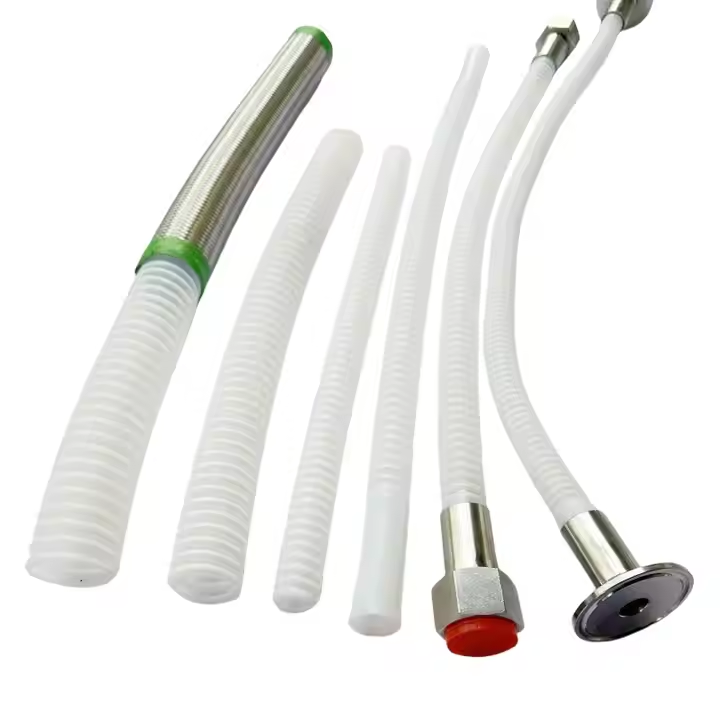
Teflon tubes demonstrate unparalleled thermal stability, operating reliably across -200°C to 260°C (-328°F to 500°F) — a range 20–50% wider than most industrial polymers. This extreme temperature tolerance makes them indispensable for cryogenic storage, high-heat reactors, and thermal transfer systems where material failure risks cascade equipment damage.
PTFE Temperature Range: Withstanding -200°C to 260°C (-328°F to 500°F)
PTFE, also known as Polytetrafluoroethylene, holds up much better under extreme temperatures compared to materials like PVC which starts warping around -10 degrees Celsius, or Nylon that begins breaking down at about 150 degrees. Tests conducted across various industries show that PTFE tubes keep roughly 91 percent of their tensile strength even after sitting for 1,000 hours straight at scorching 260 degrees Celsius. That's pretty impressive when we compare it against alternatives such as fluorinated ethylene propylene (FEP) and perfluoroalkoxy (PFA), where performance drops anywhere between 18 to 34 percentage points lower. The reason behind this remarkable durability lies in those strong carbon-fluorine bonds within PTFE molecules. These bonds need about 500 kilojoules per mole to break apart, which happens to be three times what would be required to mess with regular polyethylene bonds. This fundamental difference explains why PTFE remains so stable under harsh conditions.
Performance of Fluoropolymer Tubing Under Continuous and Intermittent Heat Exposure
In cyclical environments (e.g., batch reactors ramping from -50°C to 200°C daily), Teflon tubes exhibit:
- 0.003% linear expansion per 100°C (vs. 0.012% for silicone)
- No embrittlement after 5,000 freeze-thaw cycles (ASTM D746)
- <0.5% weight loss when exposed to 260°C for 30 days (ISO 2472)
These metrics explain why 78% of pharma manufacturers now use PTFE for hot media transfer instead of stainless steel, which requires 3× more maintenance in thermal cycling.
How PTFE Compares to Other Polymers in High-Temperature Applications
| Material | Continuous Use Limit | Intermittent Peak | Cost per Meter |
|---|---|---|---|
| PTFE | 260°C | 300°C | $18–$25 |
| FEP | 205°C | 230°C | $12–$20 |
| PFA | 260°C | 300°C | $22–$30 |
| Silicone Rubber | 230°C | 250°C | $8–$15 |
PTFE's 15–25% longer lifespan in aggressive thermal environments offsets its higher upfront cost, providing 30% lower total ownership over 5 years.
Debating the Limits: Can Teflon Maintain Integrity Above 260°C?
Most manufacturers set the standard operating limit for PTFE at around 260 degrees Celsius for ongoing use, but there are special versions mixed with ceramic additives that can handle brief exposures up to 315 degrees Celsius (about 599 Fahrenheit), particularly useful in things like aircraft hydraulic systems. The catch comes when temperatures stay high for extended periods beyond 300 degrees Celsius though. A recent materials science paper from 2023 found that PTFE loses about 80% of its molecular weight after sitting at 325 degrees Celsius for three full days straight. For anyone designing systems with these tubes, finding the right middle ground between what temperatures they'll face and how long they need to last becomes critical in making smart material choices.
Unmatched Chemical Resistance in Aggressive Environments
Corrosion Resistance of Teflon Tubes at Elevated Temperatures
Teflon tubes hold up really well even when they come into contact with harsh chemicals at super high temps because of how PTFE molecules are put together. Some lab experiments found that PTFE tubes can handle concentrated acids at around 200 degrees Celsius without much damage. After sitting in those conditions for 5,000 hours, there was less than 2% wear on the material. That's pretty impressive compared to stainless steel options which just can't match this kind of resistance to rust and corrosion according to a study published last year in Materials Performance. What makes this possible? The secret lies in those strong carbon-fluorine bonds within the PTFE structure. These bonds basically ignore most chemical reactions that would normally break down other materials, making Teflon tubes ideal for applications where chemical exposure is unavoidable.
Comparing Chemical Resistance: PTFE vs. FEP vs. PFA Tubing
While PTFE offers superior resistance to strong oxidizers like nitric acid, FEP maintains better transparency during chemical exposure. PFA bridges the gap with improved stress crack resistance against chlorinated solvents, as shown in ASTM D543 testing across 98% sulfuric acid environments. The table below highlights key differences:
| Property | PTFE | FEP | PFA |
|---|---|---|---|
| Hydrochloric Acid | Excellent | Good | Excellent |
| Acetone Resistance | Full | Moderate | Full |
| Continuous Use Temp | 260°C | 204°C | 260°C |
Case Study: PTFE in Sulfuric Acid Processing at 200°C
When one chemical facility replaced their metal alloy transfer lines with PTFE tubes, they saw an amazing 70% drop in maintenance downtime over three years according to Chemical Processing Journal from 2022. These Teflon tubes showed absolutely no signs of corrosion even after being exposed to 93% sulfuric acid at scorching 200 degrees Celsius, which really proves why PTFE stands out in those tough thermal and chemical conditions. What's interesting is that the engineering team never noticed any blistering problems or material leakage throughout all those temperature fluctuations ranging from just 50 degrees up to 200 degrees Celsius repeatedly.
Critical Applications in the Chemical Processing Industry
Teflon (polytetrafluoroethylene, PTFE) tubes have become indispensable in chemical plants where materials face simultaneous thermal stress and corrosive attacks. Their unique properties address challenges traditional materials like metal and rubber cannot withstand, particularly in extreme operational environments.
Where Teflon Outperforms Metal and Rubber Tubing in Chemical Plants
Most metal tubing just can't handle acidic environments before it starts corroding away fast. A recent study from corrosion engineers back in 2023 showed how stainless steel actually loses about half a millimeter per year when exposed to 98% sulfuric acid at around 150 degrees Celsius. Rubber hoses aren't much better either. They start breaking down once temperatures go past 120 degrees Celsius, and after sitting in heat for 500 hours straight, their ability to stretch drops by nearly 40%. The Polymer Stability Report from 2022 confirms this. Now look at Teflon tubes though. These bad boys stay strong even when temps hit 260 degrees Celsius. What's more impressive is they resist almost all industrial chemicals out there, standing up against harsh stuff like acetone and those pesky chlorinated compounds without a second thought.
Use of Teflon in Reactors, Transfer Lines, and High-Temp Hoses
Three critical applications demonstrate Teflon’s superiority:
- Reactor liners: Prevents product contamination during exothermic reactions exceeding 200°C
- Transfer lines: Safely moves molten sulfur (160–180°C) without crystallization issues common in metal piping
- Flexible hoses: Maintains pressure stability (up to 20 bar) in steam-cleaning systems where rubber fails
Growing Trend: Adoption of Teflon Tubing in Extreme Thermal Processes
The Global Chemical Engineering Survey (2024) reveals 68% of facilities now prioritize Teflon tubing for processes above 200°C, up from 42% in 2020. This shift stems from stricter EPA emissions regulations requiring leak-proof systems and manufacturers’ need to reduce downtime caused by material failures in cyclical heating applications.
Material and Engineering Advantages for Reliable Performance
Thermal Cycling and Pressure Stability of PTFE and FEP Tubing
Both PTFE and FEP tubing hold up well during extreme temperature changes, which is really important for chemical processes where temperatures jump around a lot. PTFE can actually handle over 100 thousand thermal cycles from as cold as minus 200 degrees Celsius all the way up to 260 degrees without showing any cracks. Meanwhile, FEP has better bending strength when temps aren't so extreme. According to some industry studies, equipment made with these top quality plastics sees about 40 percent fewer problems related to pressure when exposed to heat stress than what happens with rubber or metal parts. Procurement Partners International reported this finding back in 2023, adding weight to the argument for polymer solutions in demanding environments.
Selecting the Right Teflon Variant: PTFE, FEP, or PFA?
Choosing between fluoropolymers requires balancing four key factors:
| Property | PTFE | FEP | PFA |
|---|---|---|---|
| Max Continuous Temp | 260°C (500°F) | 200°C (392°F) | 260°C (500°F) |
| Flexibility | Moderate | High | Moderate |
| Chemical Resistance | Exceptional | Excellent | Exceptional |
| Primary Applications | Reactors, valves | Flexible transfer lines | Ultra-pure fluid systems |
For corrosive environments above 200°C, PTFE remains unmatched, while PFA provides better stress crack resistance in static installations. Leading material selection guidelines recommend FEP for dynamic applications requiring both chemical inertia and repeated bending.
FAQs
What are the benefits of using Teflon tubes over metal?
Teflon tubes offer superior thermal and chemical resistance compared to metal, reducing maintenance and downtime due to corrosion. They retain structural integrity at high temperatures and resist almost all industrial chemicals.
Can Teflon tubes handle temperatures beyond 260°C?
Standard Teflon tubes are rated for temperatures up to 260°C. However, versions mixed with ceramic additives can handle brief exposures up to 315°C. Prolonged exposure to temperatures above 300°C can degrade the material.
What chemicals can PTFE resist?
PTFE resists a wide range of aggressive chemicals, including concentrated acids and chlorinated solvents, thanks to its strong carbon-fluorine bonds which resist chemical reactions.
Why is FEP preferred for transparent applications?
FEP maintains excellent transparency during chemical exposure. It offers flexibility and chemical resistance, making it suitable for transparent tubing applications.
Table of Contents
- PTFE Temperature Range: Withstanding -200°C to 260°C (-328°F to 500°F)
- Performance of Fluoropolymer Tubing Under Continuous and Intermittent Heat Exposure
- How PTFE Compares to Other Polymers in High-Temperature Applications
- Debating the Limits: Can Teflon Maintain Integrity Above 260°C?
- Unmatched Chemical Resistance in Aggressive Environments
- Critical Applications in the Chemical Processing Industry
- Material and Engineering Advantages for Reliable Performance
- FAQs