 EN
EN

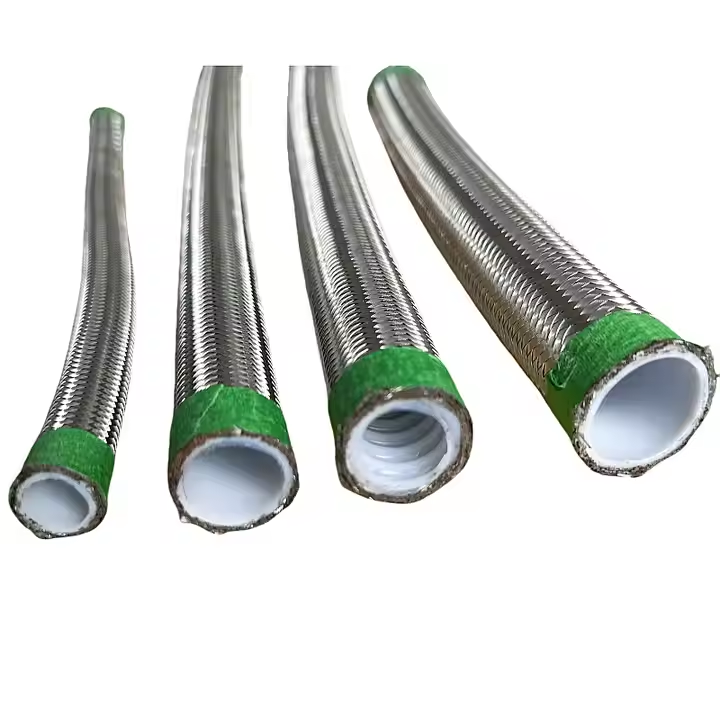
Enabling EV Electrification with PTFE Tubes
Polytetrafluoroethylene (PTFE) tubing is revolutionizing electric vehicle design by solving core challenges in high-voltage systems. Its unique combination of thermal resilience, dielectric strength, chemical inertness, and mechanical flexibility makes it indispensable for next-generation EV architectures—enabling safer energy management, reliable ADAS operation, robust data connectivity, and sustainable lifecycle performance.
PTFE tubes in battery thermal management systems
Preventing thermal runaway in batteries remains a top priority for electric vehicle safety since overheating can lead to serious problems down the road. PTFE tubes work really well for this because they handle heat exceptionally well across a wide range from minus 200 degrees Celsius all the way up to plus 260 degrees. Plus, their surfaces don't react with anything else inside the battery pack. These tubes let dielectric coolants move through the battery compartments without breaking down, keeping things running within that sweet spot between 15 and 35 degrees Celsius where battery cells last longer and perform better. Another big plus is how flexible these tubes are, making it much easier to route them through tight spaces between components. And because PTFE doesn't corrode or allow ions to migrate, even when there's an electrolyte leak somewhere, they help stop those pesky dendrites from forming and prevent fire spread through the battery pack. Studies suggest around one third of all EV fires actually stem from issues with thermal management systems failing somehow.
Chemical and dielectric stability under high-voltage EV conditions
Modern 800V+ architectures subject components to intense electrochemical stress where conventional materials degrade rapidly. PTFE tubes maintain integrity through three interdependent advantages:
- Dielectric strength of 20 kV/mm—preventing arc faults near high-current busbars and ensuring insulation reliability across voltage transients
- Chemical inertness, resisting degradation from glycol-based coolants, lithium salt residues, and off-gassing byproducts
- Hydrolysis resistance, preserving mechanical and electrical properties despite humidity ingress during repeated fast-charging cycles
Together, these properties safeguard signal integrity in battery monitoring systems and eliminate conductive pathways that could initiate ground faults—making PTFE a foundational enabler of functional safety in high-voltage EV platforms.
Supporting ADAS and Autonomous Driving Reliability
Vibration-resistant fluid routing for sensor and actuator systems
Advanced Driver Assistance Systems (ADAS) and self-driving cars need reliable thermal management for their LiDAR sensors, radar units, camera systems, and those brake actuators that operate wirelessly. Standard plastic tubing tends to crack when exposed to constant road vibrations over time, which could lead to dangerous coolant leaks or even complete hydraulic system failures. PTFE material works differently because of its unique molecular structure that actually bends instead of breaking when subjected to mechanical stress. This means no tiny cracks form from repeated flexing, so fluids keep flowing properly to all those critical safety parts. The durability of PTFE helps prevent sensors from getting too hot, something we know causes problems with accurate object detection. And let's not forget these modern vehicles are dealing with massive amounts of data every day – around 20 terabytes worth according to industry estimates – making stable operating temperatures absolutely essential for proper function.
Miniaturized, flexible PTFE tubing for compact ADAS module integration
When ADAS sensor packs get smaller and need to fit into really tight spots like A pillars, roof rails, and firewall openings, the way fluids are routed needs to become much tinier and more flexible than before. PTFE tubes can actually go down to less than 1mm in diameter while still staying kink free, which makes it possible to install them around tight corners without restricting fluid flow. The material bends without remembering its shape, so it works well with modules that move around during operation. Plus, those thin walls take up less room inside electronic control units. What's interesting is that PTFE does another job too - it acts as a shield against electromagnetic interference. With a dielectric constant of just 2.1, it keeps high speed data lines separate from nearby coolant channels, cutting down on signal interference problems in these compact domain controllers. Having this two in one capability speeds up getting new features onto vehicles and cuts overall weight. And we all know why weight matters so much these days - lighter cars mean better electric vehicle range.
Advancing Connectivity and Signal Integrity in Software-Defined Vehicles
PTFE’s low-loss dielectric properties for 5G and V2X data lines
Modern software defined cars need rock solid, fast communication links for things like 5G connectivity, vehicle to everything (V2X) interactions, and those important over the air updates. PTFE tubing actually plays a big role here because it maintains signal quality really well. The material has a super low dielectric loss tangent under 0.001 at 10 GHz frequencies, plus keeps a steady dielectric constant around 2.1. That's way better than regular old PVC which ranges from 3.0 to 4.0, or even polyethylene at about 2.3. When we get into those high frequency millimeter wave bands, PTFE cuts down signal loss by more than 40% compared to what most manufacturers typically use. This means less interference and lag when the car is navigating roads, combining data from multiple sensors, or making split second decisions through its AI systems. And in self driving tech where every fraction of a second counts, maintaining clean data transmission becomes absolutely critical as communication networks become more complicated day by day.
Thermal protection of high-speed data infrastructure with PTFE insulation
As automotive Ethernet backbones scale toward 24 Gbps+ speeds and terabit AI compute, heat-induced impedance shifts threaten signal integrity. PTFE tubing addresses this with multi-layered thermal protection:
- Broad operational range (–200°C to +260°C) shields conductors from engine bay heat and ECU thermal loading
- UL94 V-0 self-extinguishing rating meets stringent flame-spread requirements for cabin and under-hood applications
- Low thermal conductivity (0.25 W/mK) prevents localized hot spots that could destabilize high-density interconnects
By stabilizing conductor geometry and impedance against thermal expansion, PTFE preserves network reliability in domain controllers processing up to 7 TB of daily sensor data—ensuring deterministic performance for time-critical autonomous functions.
Driving Sustainability and Operational Efficiency
PTFE tubes are making waves in sustainability and efficiency throughout electric vehicle manufacturing. These tubes last much longer than standard options, so they don't need replacing as often during both assembly and when vehicles are on the road. This helps car makers get closer to their ambitious zero-waste targets. What makes PTFE really stand out is how slippery it is. The low friction means less energy is needed to pump coolants and hydraulics around the system, which translates into better fuel efficiency for drivers. Plus, because PTFE doesn't break down easily when exposed to chemicals, there's far less maintenance required over time. Production lines stay running smoother and fleet operators save money in the long run. And unlike other materials that need additives to work properly, PTFE stands alone without plasticizers or stabilizers. This absence prevents harmful substances from leaking out and makes recycling these components easier as we move toward more sustainable disposal practices in the automotive industry.
FAQ
What makes PTFE tubes suitable for EV battery thermal management?
PTFE tubes handle heat exceptionally well, have flexible routing capabilities, and resist corrosion and ion migration, making them ideal for managing battery temperatures and preventing thermal runaway.
How do PTFE tubes contribute to ADAS and autonomous driving reliability?
PTFE tubes provide vibration resistance and electromagnetic interference shielding, ensuring fluids flow properly and preventing overheating in sensor and actuator systems, thus maintaining accuracy and reliability.
Why are PTFE tubes important for modern vehicle connectivity?
PTFE tubes offer low dielectric loss and thermal protection, helping maintain signal quality for 5G, V2X communication, and high-speed data transmission in software-defined vehicles.
How do PTFE tubes enhance sustainability in electric vehicles?
PTFE tubes' durability and chemical resistance reduce the need for frequent replacements and maintenance, aiding in achieving zero-waste targets and improving fuel efficiency by reducing friction.