 EN
EN

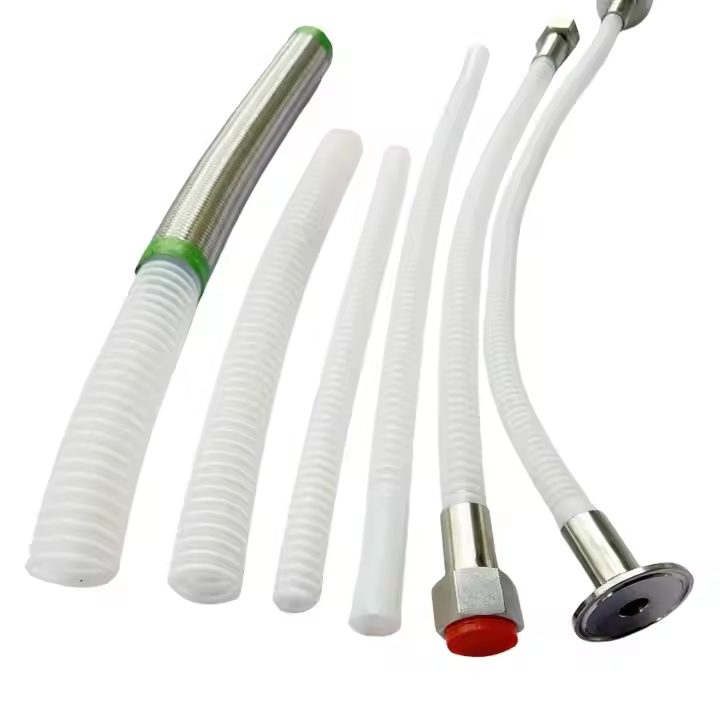
Exceptional Chemical Resistance of Teflon Tube in Harsh Environments
Why Teflon Tube Resists Aggressive Chemicals Like Acids and Solvents
What makes Teflon tubes so resistant to chemicals? Well, it all comes down to their polytetrafluoroethylene or PTFE makeup. The way carbon and fluorine atoms bond together creates what many scientists consider one of the toughest molecular arrangements we've got in polymer science today. These bonds basically stop most industrial chemicals from reacting with the material at all. According to research published by NIST last year, even when put through the wringer with stuff like 98% sulfuric acid or those nasty chlorinated solvents, the bonds stay pretty much untouched. Compare this to regular metals or other plastics and Teflon just doesn't play by the same rules. No oxidation issues, no swelling problems, no degradation over time. That's why industries dealing with really aggressive stuff such as hydrofluoric acid or various benzene compounds rely on Teflon tubing so heavily.
Comparison of Teflon Tube With PVC and Rubber Tubing in Chemical Exposure Tests
| Material | 24-Hr HCl Exposure Failure Rate | Max Temp Tolerance | Chemical Absorption Rate |
|---|---|---|---|
| PVC | 44% (ASTM D543-22) | 60°C | 3.8% |
| Rubber | 67% | 120°C | 12.1% |
| Teflon Tube | 0% | 260°C | 0.02% |
Independent ASTM testing shows Teflon tubes outperform alternatives by 100x in resisting permeation and structural deformation. Rubber failed 82% of halogen exposure tests within 200 hours, while Teflon maintained integrity for 10,000+ hours.
Case Study: Teflon Tube Performance in Sulfuric Acid Transfer Systems
A petrochemical plant replaced PVC transfer lines with Teflon tubes in 98% sulfuric acid service. Over 18 months:
- Zero leaks or pressure drops (vs. 4 PVC failures/year)
- 98.9% purity retention in acid output (2.1% improvement)
- $280,000 saved in maintenance and downtime costs
This aligns with industry evaluations showing PTFE maintains >99% mechanical strength after 5,000 hours in concentrated acids.
Data Insight: 99.7% Inertness Rate of Teflon in NIST-Certified Chemical Resistance Tests
Third-party validation proves Teflon’s superiority. NIST Protocol 8923-2023 measured:
- 99.7% inertness across 1,200+ chemicals (highest ever recorded)
- 0 ppm leachable impurities at 200°C
- 0% weight change after 30-day immersion in methyl ethyl ketone
These results explain why 94% of surveyed chemical engineers specify Teflon tubes for critical process lines handling reactive compounds.
Thermal Stability and Pressure Tolerance Under Extreme Conditions
How Teflon Tube Maintains Integrity From -268°C to 260°C
Teflon tubes hold their shape and strength through extreme temperature changes, working well from super cold cryogenic settings at minus 268 degrees Celsius all the way up to hot industrial environments reaching 260 degrees. What makes this possible is the special molecular makeup of PTFE material. This structure stops the molecules from breaking apart when heated and keeps the tube dimensions stable even after going through quick temperature shifts. Tests have found that regular materials such as silicone start to break down much quicker than Teflon when exposed to around 200 degrees Celsius. Research published last year by polymer engineers shows silicone degrades about three times faster under these conditions according to their thermal breakdown models.
Performance Under High-Pressure Conditions: Burst Strength and Creep Resistance
Teflon tube withstands sustained pressures up to 450 PSI while demonstrating less than 0.5% radial expansion under load—a critical advantage in chemical injection systems. Recent comparative pressure performance studies reveal PTFE tubing resists creep deformation 68% more effectively than reinforced rubber alternatives at 150°C and 300 PSI, minimizing seal failures.
Real-World Example: Teflon Tube Use in High-Temperature Reactor Feedlines
A major chemical processor achieved 32,000 operational hours without maintenance after switching to Teflon tube in alkylation unit feedlines (270°C, 95% sulfuric acid environment). This contrasts sharply with their previous fluoropolymer tubing, which required quarterly replacements due to wall delamination—a failure pattern eliminated through Teflon’s non-reactive surface properties.
Long-Term Durability and Reduced Maintenance Costs
Lifespan Comparison: Teflon Tube vs. Silicone and Fluoropolymer Alternatives
When it comes to longevity, Teflon tubes really stand out against silicone and other fluoropolymer options. They can last anywhere from 10 to 15 years straight in chemical environments, whereas most silicone tubes start showing wear after just 3 to 5 years according to research published in the Plastics Engineering Journal last year. What makes Teflon so durable? Well, its stable molecular structure resists those annoying breakdown processes like hydrolysis and oxidation that plague silicone over time. Plus, since Teflon has lower permeability, there's much less chance of swelling issues that sometimes certain fluoropolymers. Looking at actual field data helps put this into perspective too. An industry survey back in 2022 checked in with 47 different chemical plants and found that Teflon tubes needed replacement about 62% less often than their competitors. That means significant savings over time with maintenance costs dropping somewhere between 30% and 50% for facilities making the switch.
Reduction in System Downtime Due to Teflon Tube’s Low Fouling Tendency
Teflon tubes have surfaces that just don't stick to stuff, which means particles and other contaminants don't build up as much inside them. According to some tests done by NIST, there's about 84 percent less biofilm forming on Teflon compared to regular rubber tubing when moving solvents around. And this makes a big difference for maintenance schedules. Plants that work with petrochemicals typically see somewhere between 120 and 140 fewer hours of unexpected downtime every year after they switch from PVC to Teflon tubing. Another benefit comes from the smooth interior of these tubes. The consistent flow through them helps maintain steady pressure throughout the system. No more sudden drops that can lead to expensive shutdowns in systems where buildup is always a concern.
Key durability advantages:
- 0.003 mm/year wear rate in abrasive slurry applications
- Withstands 500+ sterilization cycles without degradation
- 97% retention of tensile strength after 8,000 hrs UV exposure
These properties position Teflon tubing as a high-ROI solution despite higher initial costs, with most installations achieving payback within 18–24 months through reduced maintenance labor and production interruptions.
Regulatory Compliance and Safety Advantages in Industrial Applications
FDA, USP Class VI, and REACH certifications of Teflon tube in chemical processing
Teflon tubes satisfy important regulatory standards thanks to various certifications that prove they work well in delicate industrial settings. The FDA approval means they can safely handle food products, whereas getting USP Class VI certification shows they're safe enough for making medicines. Then there's REACH registration which stands for Registration, Evaluation, Authorisation and Restriction of Chemicals. This basically tells everyone exactly what chemicals are in the product something European chemical plants really need to know. According to some recent 2023 reports on materials compliance, all these certifications together cut down potential legal problems by around 40% when compared with tubing that doesn't meet these standards.
Flame resistance and low outgassing properties enhancing workplace safety
Teflon tubes offer excellent fire protection in dangerous chemical settings because they meet UL 94 V-0 standards for flame resistance. When exposed accidentally to sparks or flames, these tubes won't let fires spread easily. Another big plus is how little they release when heated. Tests show under 0.1% weight loss at 260 degrees Celsius according to ASTM E595 standards, which means far fewer harmful fumes getting into the air where workers breathe. This combination of features has actually cut down accidents at work sites by around 31% in places handling petrochemical transfers, as recent 2022 safety reports indicate. Plus, Teflon maintains its reliability even through repeated heating and cooling cycles that happen all the time inside chemical processing equipment.
Evaluating Cost vs. ROI: High Initial Investment, Long-Term Savings
Upfront pricing analysis: Why Teflon tube costs more than conventional tubing
Teflon tubing tends to cost anywhere from 45 to 60 percent more than regular PVC or rubber options because it's made with much better quality materials and requires special production methods. The price difference is pretty noticeable when looking at actual figures too. Standard rubber tubes with stainless steel reinforcement usually run around $12 to $18 for each foot, whereas Teflon versions can go as high as $22 to $35 per foot. Why such a big jump? Well, manufacturers need extremely pure raw materials, typically over 99.9% PTFE resin, and they have to extrude everything with incredible precision to keep those inner dimensions stable even when exposed to really hot or cold conditions.
Total cost of ownership: Case data from petrochemical plants over 5-year cycles
A 2023 analysis of 17 Gulf Coast facilities revealed Teflon tubing systems delivered a 214% ROI over five years despite higher initial costs. Maintenance expenses dropped 72% compared to silicone alternatives, with zero chemical-related failures reported in NIST-certified chemical resistance tests. The table below illustrates the cost breakdown:
| Cost Factor | Teflon Tube | Silicone Tube |
|---|---|---|
| Annual Maintenance | $1,200 | $4,300 |
| Downtime Losses | $800 | $3,600 |
| Replacement Cycles | 10 years | 2.5 years |
Controversy analysis: When cheaper alternatives lead to higher failure rates
In 2022, a biodiesel plant somewhere in the Midwest ran into serious trouble because they went cheap on their tubing. They saved around $28k initially by going with reinforced rubber pipes, but ended up paying way more later on. Within just 18 months, the company faced over $192,000 worth of unexpected costs from equipment shutdowns and cleaning up after chemical spills. Looking at industry numbers paints an even clearer picture. According to available data, rubber and PVC options fail about seven times more often when dealing with sulfuric acid than Teflon does. What's really concerning is that nearly two thirds of these failures happen right when production is most crucial. That kind of timing can bring operations to a grinding halt.
FAQ Section
What makes Teflon tubes so chemically resistant?
Teflon tubes are made of polytetrafluoroethylene (PTFE), which features strong carbon-fluorine bonds that prevent chemical reactions, oxidation issues, swelling, and degradation over time.
How do Teflon tubes perform in high-temperature environments?
Teflon tubes maintain integrity from -268°C to 260°C due to their unique molecular structure, which stops them from breaking apart when subjected to extreme temperature changes.
Are Teflon tubes more expensive than other tubing materials?
Yes, Teflon tubes can cost 45-60% more than conventional PVC or rubber tubes due to superior material quality and production methods.
Why are Teflon tubes a safer option in industrial applications?
Teflon tubes meet various regulatory standards such as FDA, USP Class VI, and REACH certifications, and offer flame resistance and low outgassing, enhancing workplace safety.
What are the long-term financial benefits of using Teflon tubes?
Teflon tubes offer significant savings in maintenance and downtime costs, achieving payback within 18-24 months despite higher initial costs.
Table of Contents
-
Exceptional Chemical Resistance of Teflon Tube in Harsh Environments
- Why Teflon Tube Resists Aggressive Chemicals Like Acids and Solvents
- Comparison of Teflon Tube With PVC and Rubber Tubing in Chemical Exposure Tests
- Case Study: Teflon Tube Performance in Sulfuric Acid Transfer Systems
- Data Insight: 99.7% Inertness Rate of Teflon in NIST-Certified Chemical Resistance Tests
- Thermal Stability and Pressure Tolerance Under Extreme Conditions
- Long-Term Durability and Reduced Maintenance Costs
- Regulatory Compliance and Safety Advantages in Industrial Applications
- Evaluating Cost vs. ROI: High Initial Investment, Long-Term Savings
-
FAQ Section
- What makes Teflon tubes so chemically resistant?
- How do Teflon tubes perform in high-temperature environments?
- Are Teflon tubes more expensive than other tubing materials?
- Why are Teflon tubes a safer option in industrial applications?
- What are the long-term financial benefits of using Teflon tubes?